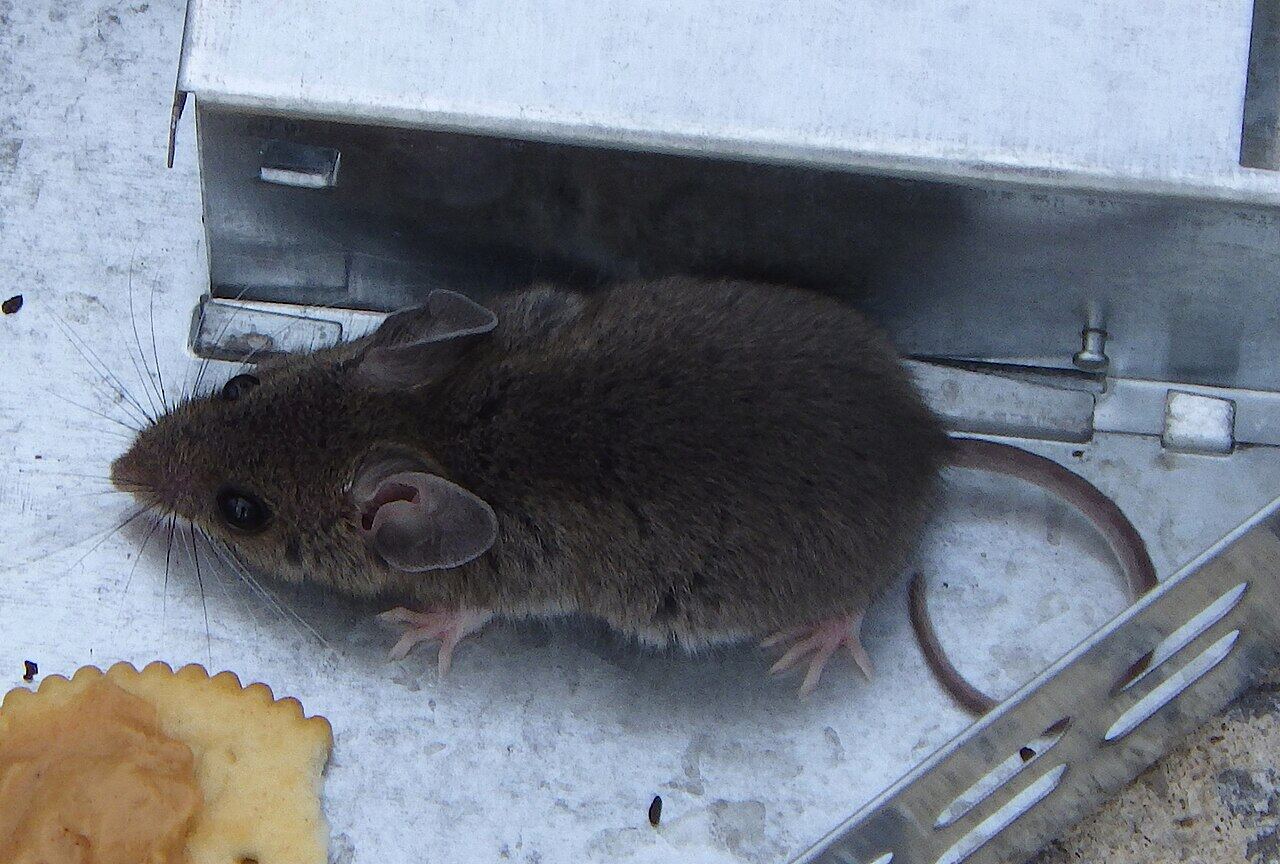
Light, fast scratching that moves along a wall or ceiling after dark is usually house mice. Louder scratching, thumping or gnawing, especially low in the house near the cellar, points to Norway rats. Rodents are mostly active at night, so that is when you hear them. Confirm with droppings: rice-grain size means mice, about 3/4 inch means rats.
Mouse sounds
Mice are light. They make quick, scratchy, skittering sounds as they move inside walls, between floors and across ceilings. You may hear tiny squeaks, especially if there is a nest with young. Sometimes you hear a faint rolling sound, which can be a mouse moving food.
Mice in Baltimore rowhouses often travel along plumbing and heating pipes, so sounds often follow the route of a radiator riser or the wall behind the kitchen sink. In county homes, sounds in the ceiling of the top floor often mean mice in the attic insulation.
Rat sounds
Rats are heavier. Their scratching is louder, and you may hear thumps, scurrying and gnawing, a steady grinding sound as they chew wood or plastic. Norway rats usually stay low in Baltimore homes, so the sounds tend to come from the cellar, the first floor and lower walls, or under the floor.
Roof rats are uncommon in Baltimore, so loud sounds in the attic of a rowhouse are less likely to be rats. In detached homes with big trees, squirrels are another possibility.
What else it could be
Not every night noise is a rodent.
- Squirrels are active by day, not night. Daytime thumping and scratching in an attic is often squirrels.
- Raccoons are much louder and heavier, usually in attics or chimneys.
- Birds in vents or chimneys chirp and flutter, mostly in the morning.
- Old houses creak, pipes tick as they heat and cool, and radiators knock.
Timing is a big clue. Mice and rats are most active after dark. Sounds that happen in the middle of the day point to something else.
How to confirm
- Look for droppings near where you hear sounds: under the sink, behind appliances, in closets, the cellar and attic.
- Check for gnawed food packaging, shredded paper or insulation.
- Dust a little flour along a baseboard or in a cabinet and check for tracks in the morning.
- Set a couple of snap traps near the sound and see what you catch.
See rat droppings vs mouse droppings.
What to do next
For mice in walls, find where they come out to feed, set traps there and seal the openings. See mice in the walls.
For rats, check the cellar for entry points and the yard for burrows. Set rat-size traps along cellar walls and prebait them. See how to get rid of rats in Baltimore.
Do not put loose poison into walls. Rodents that eat it often die there, and the smell lasts.
Where the sound is tells you a lot
In a Baltimore rowhouse, location helps narrow it down.
- In the kitchen wall or ceiling, near the sink or stove: usually mice following plumbing.
- In the ceiling of the top floor, under a flat roof: often mice that got in at the roofline or climbed a pipe chase.
- Low in the first-floor walls or under the floor, near the cellar: often rats, especially with heavier sounds.
- In the cellar itself: rats or mice, depending on droppings.
- Along a party wall: possibly coming from next door.
In county homes with attics, scratching above the top-floor ceiling at night is often mice in insulation, while daytime noise up there is more likely squirrels.
Write down when and where you hear sounds for a few nights. A pattern, like every night at the same wall around 2 a.m., gives a technician a big head start. It also helps you place traps on your own.
Pay attention to whether the sounds move. Sounds that travel from the floor up a wall usually follow a pipe or chase. Sounds that stay in one spot may mean a nest. If sounds stop suddenly and a smell follows a few days later, a rodent may have died there. See dead rodent smell.
Shared walls carry sound too. In an attached rowhouse, scratching in the party wall can come from mice on either side. Seal the openings on your side, and if the sound keeps coming from that wall, ask your neighbor whether they have seen droppings.
Why sounds get louder in fall and winter
As the weather cools, rats and mice move indoors for warmth. Many Baltimore homeowners first hear them in October or November. The sounds can increase if they start building nests or raising young. Acting early, before a population grows, saves a lot of trouble. See seasonal rodent problems in Baltimore.