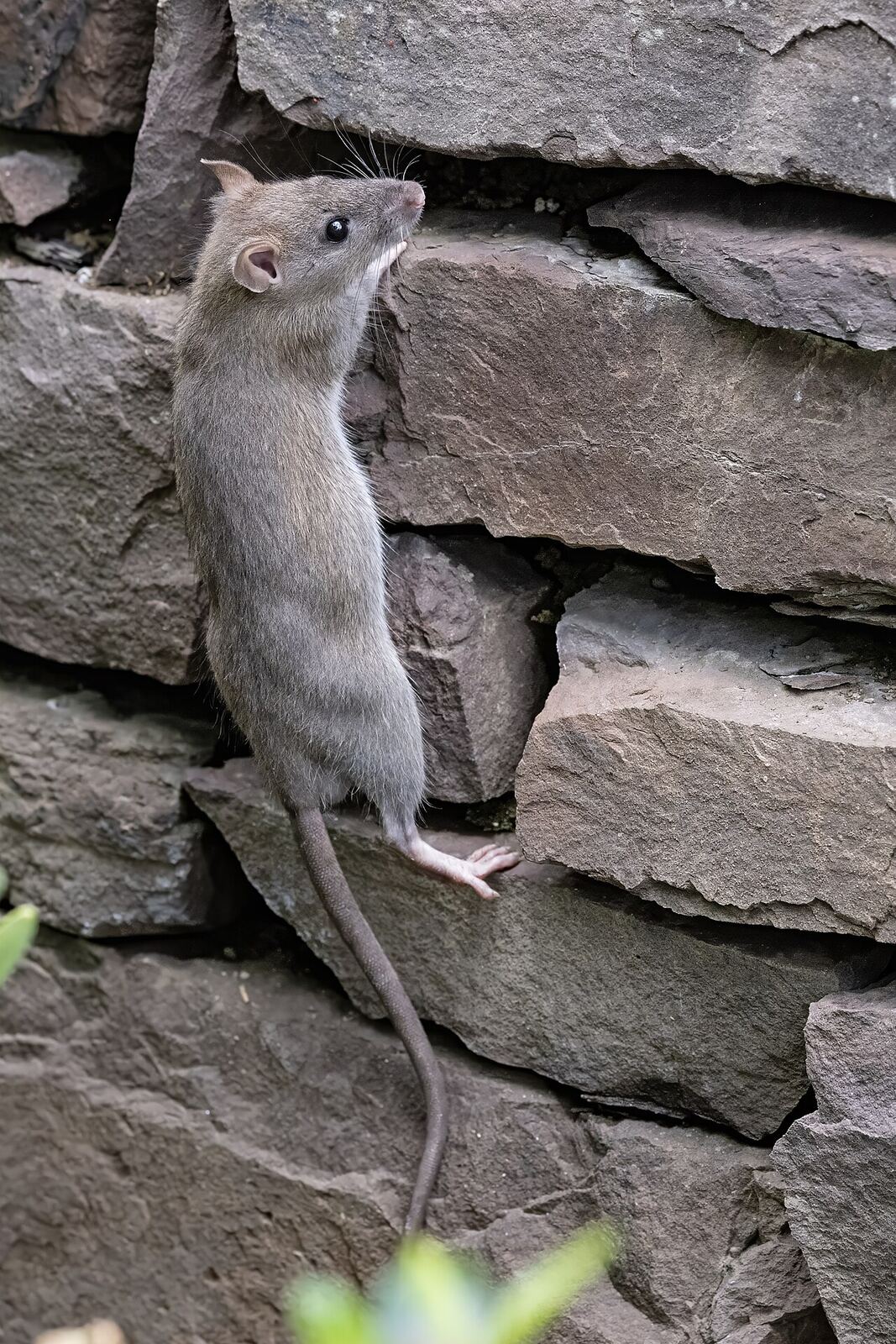
Norway rats live in burrows. In a Baltimore back yard you find them along the rear fence, under a shed or a cracked parking pad, beneath a deck, beside the alley wall and in raised garden beds. Burrow treatment goes after the colony where it sleeps and breeds, then closes the tunnels so it cannot move back in. It works best alongside sealing the house and fixing the trash.
How to spot an active burrow
Rat burrow openings are usually two to three inches across, smooth-sided, with loose dirt fanned out at the entrance. Active burrows look used: no cobwebs or leaves across the hole, fresh dirt, a worn path leading to it and sometimes droppings nearby. Several openings close together often connect underground.
Common spots in Baltimore yards include the gap between the fence and the alley, under the back steps, along the foundation of a rear kitchen addition, inside ivy or overgrown beds and under any concrete pad that has cracked or settled. If your yard is paved, look at the edges where pavement meets dirt.
A simple test helps. Loosely fill a few openings with soil or crumpled newspaper in the evening. If they are open again the next day, the burrow is active.
What a thorough burrow treatment includes
Ask for these pieces:
- A walk of the yard, fence line and alley edge to count and map active burrows
- Treatment of active burrows with a product labeled for burrow use, placed deep in the tunnel
- Follow-up to see which burrows reopen, with retreatment where needed
- Collapsing or filling burrows once they stay closed, sometimes with gravel or hardware cloth where they keep coming back
- A look at what feeds the colony: cans, compost, pet food, bird seed, fallen fruit
- Sealing of the house itself, since rats from the yard try the cellar next
Under EPA label rules, professional loose pellet bait outdoors is allowed only when placed at least six inches down active rat burrows. Anything above ground outdoors has to be in a tamper-resistant station. Some providers use carbon monoxide or dry ice burrow treatments where the label and state rules allow it. Ask what they plan to use and why.
Step by step
- The technician maps active burrows, often marking each one.
- Burrows get treated, deep enough that pets and kids cannot reach the material.
- Openings are lightly closed so the next visit shows which ones reopened.
- A few days to a week later, reopened burrows are retreated.
- Once a burrow stays closed, it is collapsed and filled.
- Exterior stations or traps may go along the fence or foundation to catch rats that move.
You do your part on the food side. Use a can with a tight-fitting lid, which Baltimore's code requires. Do not put bagged trash in the alley. Pick up pet waste daily and stop feeding birds until the burrows are gone.
Burrow treatment and the city Rat Rubout program
Baltimore DPW runs Rat Rubout, which inspects properties for active burrows and baits them when it finds one. You request it through 311, and the occupant signs a right of entry form so the worker can go into the yard. Treated burrows get a yellow flag, and the worker leaves a card.
That is a useful free option, especially for burrows along the alley or on a vacant lot. A private provider adds what Rat Rubout does not: indoor work, sealing the house, follow-up on your schedule and a written plan. Many homeowners do both. Our guide on how to report rats in Baltimore has the details.
Why burrows keep coming back here
A Baltimore block works as one rat habitat. If your yard is treated but the yard two doors down has open cans and a burrow under the shed, rats will dig back toward you. Vacant lots and vacant rowhouses add more ground for colonies. The Hopkins studies found that cleared blocks tend to refill to their old numbers when the food and shelter stay the same.
So the strongest results come when neighbors act together. A block-wide push with Rat Rubout, tight lids on every can, bulk trash set out only on the scheduled day and burrows treated in several yards at once gives the rats much less to come back to. The Baltimore trash and sanitation rules guide lists the code sections that apply.
What to ask before you book
Ask what product goes into the burrows, how deep, and how they keep pets away from it. Ask how many follow-up visits are included and whether filling or collapsing burrows is part of the price. Ask whether they will also check the cellar and rear wall for entry points. Confirm the business holds a Maryland Department of Agriculture pesticide license.