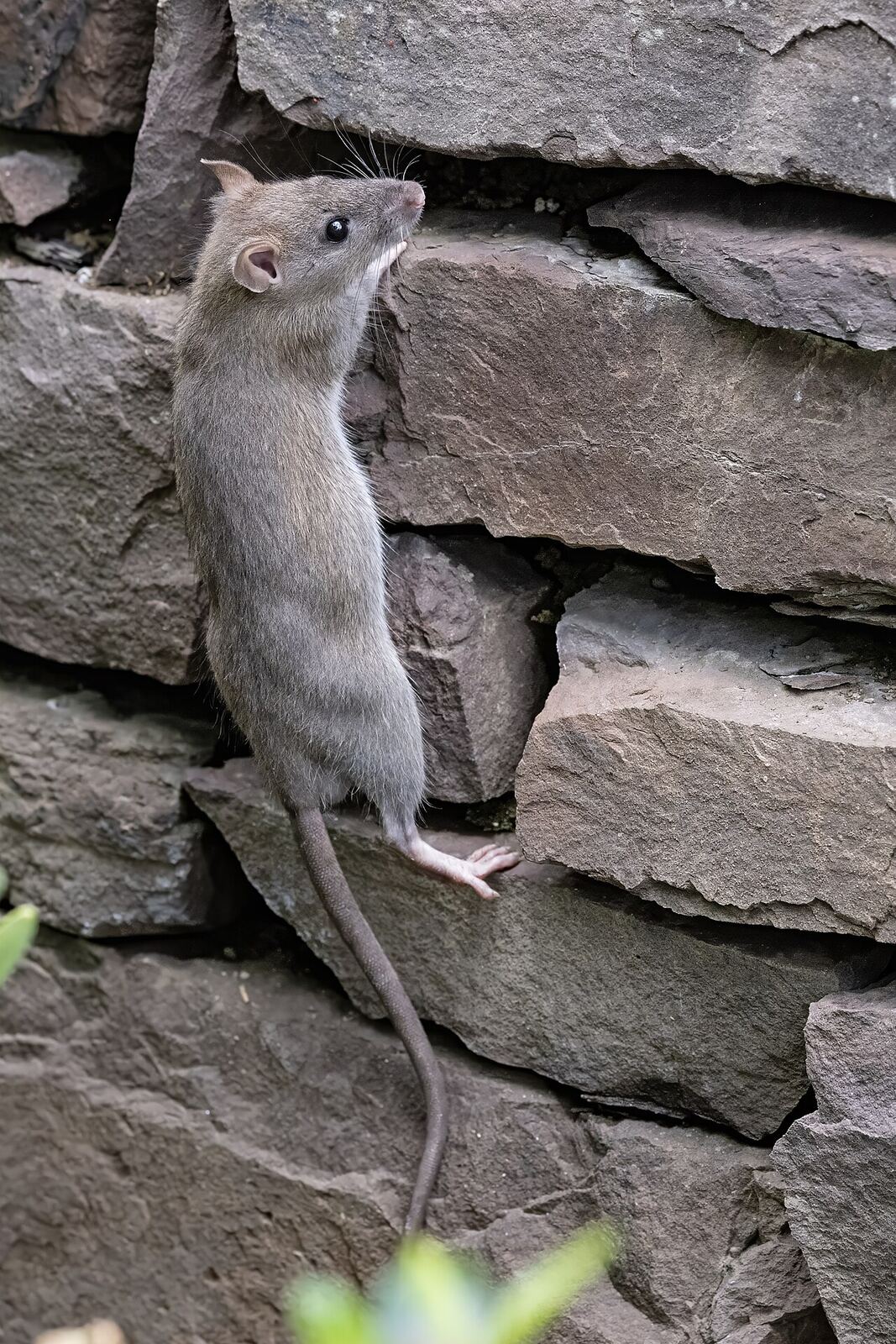
Dead rodent removal handles the smell nobody can ignore: a rat or mouse that died inside a wall, under a floor, above a ceiling or in the cellar. In Baltimore it often shows up a few days after someone put out bait, either you or a neighbor in an attached house. The fix is finding the source, removing it, and cleaning and deodorizing the spot.
Why the smell shows up
A dead rodent gives off a strong, sweet, rotten odor as it breaks down. A mouse is small and the smell usually fades sooner. A rat is larger, and the smell can last for weeks. Flies, especially in warm weather, often find the source first, so a cluster of flies at a baseboard or outlet is a clue.
Rodents that eat bait often crawl back into their nest or a wall void before they die. In a rowhouse, that may be on your side of the party wall even if the bait was next door. See dead rodent smell for what to try before calling.
What a thorough removal job includes
Ask for these steps:
- Tracing the odor to the strongest point, using smell, flies, stains and the rodent's likely route
- Opening the smallest possible access, such as a cut in drywall, a lifted floorboard or a removed vent cover
- Removing the carcass, nest material and any soiled insulation around it
- Disinfecting the spot and deodorizing it
- Patching or noting the access opening, with patching priced if it is separate
- Checking for more activity and the entry point the rodent used
Some carcasses are out of reach, deep in a plaster wall or under a slab. In that case the provider should tell you so and explain what odor control is possible while it dries out.
Step by step
- You describe where the smell is strongest and when it started.
- The technician narrows the area by smell and by checking the cellar, ceiling and wall cavities near pipes.
- A small access hole or a lifted board confirms the location.
- The carcass and nest debris are bagged twice and removed.
- The area is sprayed with disinfectant, left to soak, wiped and deodorized.
- The technician looks for the entry and any sign of more rodents, and recommends trapping or sealing if needed.
If you find one yourself, follow CDC guidance: wear gloves, spray the rodent and the area with disinfectant or a one-to-nine bleach mix, let it soak five minutes, double-bag it and put it in a covered trash can.
Why Baltimore houses make it harder
Plaster over brick is common in older rowhouses, and opening it is messier than cutting drywall. Rowhouse floors often have a gap between the subfloor and the plaster ceiling below, which gives rodents long, hidden spaces to die in. Cellar ceilings may be covered with paneling or drop ceilings that hide the source.
Attached homes add another layer. A rodent that ate bait in the house next door can die in your wall. If the smell started right after a neighbor treated, tell the technician. It helps narrow the search.
One dead rodent often means more
A dead rodent inside means a live population had a way in. Ask the provider to check for active droppings and entry points and pair removal with trapping or exclusion as needed. If the mess is larger than one spot, ask about rodent cleanup.
What you can try before calling
Sniff along baseboards, outlets and heating registers to find where the smell is strongest. Check the cellar ceiling under that spot, behind the refrigerator and stove and under the bottom cabinets, since rodents often die in reachable places. Look for flies gathering at one spot. If you find it, use gloves, spray it with disinfectant, double-bag it and put it in a covered can. If the source is inside a closed wall, a technician can cut a small, targeted opening.