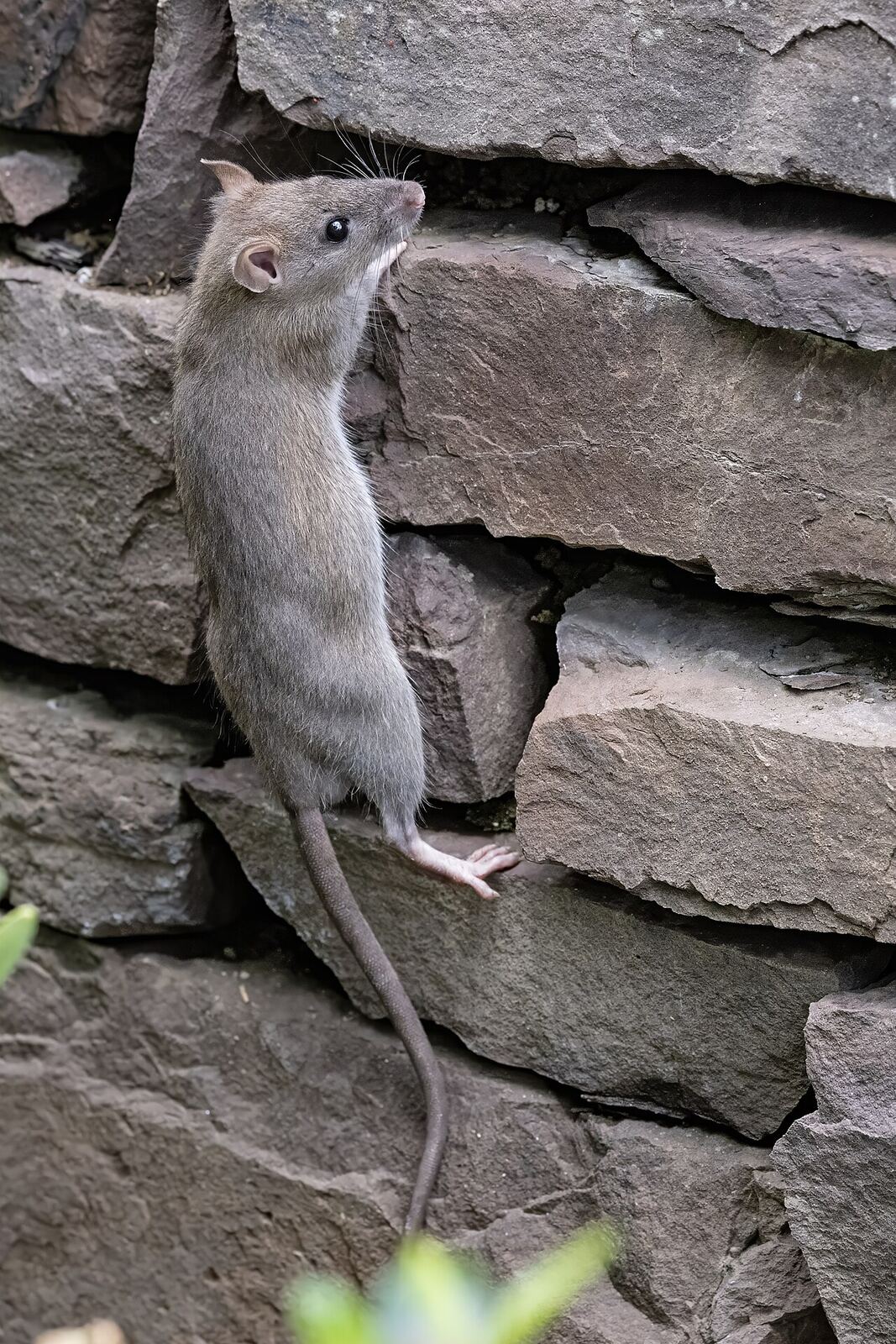
A sudden sweet, rotten smell in one room, often with flies gathering, usually means a mouse or rat died nearby. Sniff along baseboards, outlets and vents to find the strongest spot, then check reachable places first: behind appliances, under cabinets and the cellar ceiling below. If you find it, follow CDC steps to clean up. If it is inside a closed wall, a small targeted opening is often the fastest fix.
Why it happens
Rodents that are sick or have eaten bait often crawl into a hidden spot to die. In a Baltimore rowhouse that can be inside a plaster wall, in the space between floors, behind a cellar drop ceiling or under a kitchen cabinet. Smell builds over a few days as the body breaks down.
The timing is a clue. If the smell started a few days after you or a neighbor put out bait, that is likely the cause. In attached houses, a rat that ate bait next door can die on your side of the party wall.
How to find the source
- Walk the room and sniff along baseboards, outlets, heating registers and cabinet bases. The smell is strongest closest to the source.
- Watch for flies gathering in one spot, or stains on a ceiling or wall.
- Check reachable spots first: behind and under the stove, refrigerator and dishwasher; inside base cabinets; under the sink.
- Go to the cellar and check the ceiling below the room, especially around pipes.
- Look in closets on the same wall and any access panels.
Rodents often die in reachable places. It is worth checking everywhere you can before cutting into a wall.
When the wall has to be opened
If the strongest smell is on a closed wall and you have checked everything reachable, a small opening is often the fastest fix. A technician can narrow the spot first, sometimes using an outlet box, vent or the ceiling below, then cut a small, targeted hole. In plaster walls, that takes more care than drywall.
Some carcasses are out of reach, like deep in a masonry wall or under a slab. In those cases, the smell fades as the carcass dries out, though it can take weeks. Ventilation and odor absorbers can help in the meantime. See dead rodent removal.
How to clean it up
The CDC's steps for dead rodents:
- Wear rubber or plastic gloves.
- Spray the dead rodent, any nest and the area around it with disinfectant or a fresh 1 to 9 bleach and water mix, and let it soak 5 minutes.
- Place the rodent in a plastic bag, tie it shut, then seal it in a second bag.
- Put the double-bagged waste in a covered trash can that is emptied regularly.
- Wash gloved hands, remove the gloves and wash bare hands with soap and warm water.
Then clean and disinfect the surface, and use an enzyme odor cleaner if the smell has soaked into wood or plaster.
Masking the smell
Air fresheners and candles cover the smell for a short time but do nothing about the source. Opening windows and running fans helps. Bowls of baking soda, activated charcoal or coffee grounds near the spot can absorb some odor. None of these speed up the drying process, so finding and removing the source is the real fix when it can be reached.
Where rodents often die in Baltimore rowhouses
In rowhouses, common spots include the space under the kitchen floor near the dishwasher or stove, inside the wall behind the sink, the cellar ceiling near pipes, under a bathtub on an upper floor and the space between the top-floor ceiling and a flat roof. In rear kitchen additions, rodents sometimes die in the gap under the floor where the addition meets the original house.
In county homes, look in attics near the eaves, in finished basement drop ceilings, inside the garage wall that backs onto the house and in crawl spaces.
If the smell is near a heating register, the source may be in the ductwork. A technician or HVAC contractor can check it. Turning off forced-air heat to that room for a few days can help the smell stay put while you look.
Keep it from happening again
One dead rodent means a live population had a way in. Look for droppings and the entry point, which in a rowhouse is usually in the cellar or at the rear of the house.
Indoors, use snap traps instead of loose bait so you can remove each catch. If bait is used outside, it should be in locked stations or deep in burrows. See best rat and mouse traps, rodent exclusion and mice in the walls.