In Maryland, the Department of Agriculture's Pesticide Regulation Section licenses pest control businesses and certifies the people who apply pesticides. Any business offering pest control services needs a pesticide business license, and it has to have at least one certified applicator. Rodent control in and around structures falls under category 7D. You can check licenses on MDA's search pages or by calling the Pesticide Regulation Section at 410-841-5710.
This guide covers what to check, what to ask and the rodenticide rules that apply to products used in and around your home.
Who needs a license in Maryland
MDA says a pesticide business license is required for any business offering pest control services or applying general or restricted use pesticides for hire. Each licensed business has to designate at least one certified applicator.
There are two kinds of individual credentials:
- A certified applicator is certified by MDA after meeting experience or education requirements and passing MDA's general standards exam plus at least one category exam with a score of 70% or higher. Applicants must be at least 18.
- A registered employee works in pest control sales, service or inspections and completes an MDA-approved training program within 30 days of hire or a change in duties. Registration renews each year.
Licensed businesses also have to carry insurance. MDA lists bodily injury coverage of $100,000 per person and $300,000 per occurrence, and property damage coverage of $15,000 per occurrence with a $30,000 annual aggregate, with a certificate of insurance on file with MDA.
The license category for rodent work
MDA organizes certification into numbered categories. Category 7 is Industrial, Institutional, Structural and Health Related, and it has subcategories:
- 7A, General Pest Control, for household pests in or next to a structure
- 7B, Wood Destroying Insects
- 7C, Wildlife Control
- 7D, Rodent Control, for rodents found in and around a structure
- 7E, Fumigation
For rat and mouse work at your home or business, the certified applicator should hold category 7D. Ask for it by name. MDA's category list notes that wildlife trapping and removal alone does not require category 7C, though businesses doing it need a Department of Natural Resources wildlife damage control permit. That note is about wildlife, not about rats and mice that are treated with pesticides.
How to check a license
MDA's searchable pesticide database page lists three search tools:
- Business License Search, by license number, company name or license category
- Licensed Dealers Search
- Certified Pesticide Applicators Search, by last name, applicator number or category
You can also call the Pesticide Regulation Section at 410-841-5710, Monday through Friday, 8 a.m. to 5 p.m., to check licensing and certification or to file a complaint about pesticide misuse.
MDA's consumer guidance also says to deal only with an MDA licensed firm and to ask to see a current copy of the Pesticide Business License. Registered employees carry an MDA-issued ID card with their name, the business name and address and a photo. Ask to see it.
What MDA says to ask before hiring
MDA's consumer page gives a short list of steps:
- Ask for an inspection and a written proposal that outlines the pest control program, including the pests, where and how bad, the methods, the pesticides and any precautions and prevention steps.
- Review the proposal, labels and any warranties with the applicator, and ask about alternatives and how to reduce exposure.
- Get quotes from at least three licensed firms.
- Do not let anyone rush the decision.
- Ask which materials the company plans to use and why.
- Get a written service agreement, and ask whether it renews automatically each year.
- Ask about cancellation penalties, and cancel in writing rather than by phone.
When a pesticide is applied or a contract is signed, MDA says the customer must receive written information including the business name, Maryland pesticide business license number, business phone, the Maryland Poison Center number, the products' common name or active ingredient and the label or an approved safety document. On request, the company has to give advance notice before an application.
Rodenticide rules that apply in Maryland
Rodenticide products are regulated federally by the EPA, and MDA's pesticide registration search lists products registered to be sold in Maryland. Under EPA's restrictions:
- The second-generation anticoagulants brodifacoum, bromadiolone, difenacoum and difethialone are no longer registered for consumer products. They are sold only for commercial and structural pest control.
- Consumer rodenticides must come in bait stations, with block or paste bait. Pellets are not allowed in consumer products.
- Professional products may be blocks, paste or pellets, are not sold in drug, grocery or hardware stores and come in large packages.
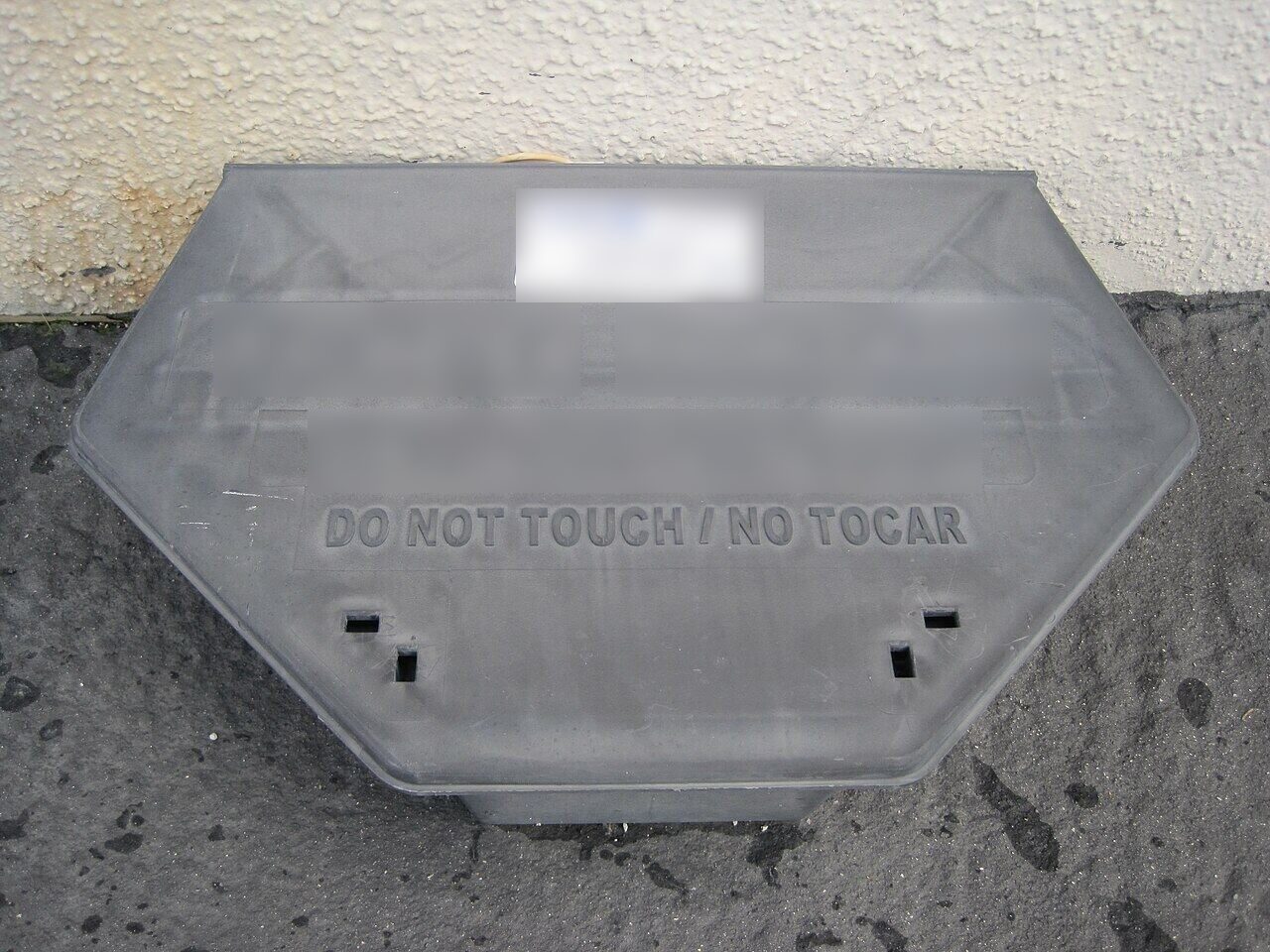
- Tamper-resistant bait stations are required where children under six, pets or nontarget wildlife may reach the bait, and for all above-ground outdoor placements.
- Outdoor burrow baiting is allowed only for pelleted bait placed at least six inches down active rat burrows.
We did not find a separate Maryland state law restricting rodenticides beyond federal rules and MDA product registration as of November 2026. Rules change, so check with MDA if this matters for your property.
Red flags
- No license number on the paperwork, or reluctance to show it
- A technician with no MDA ID card
- Pressure to sign a long contract on the spot
- Loose bait pellets scattered in a yard or cellar instead of placed in stations or deep in burrows
- A bait-only plan with no inspection and no mention of sealing
- Promises that sound too good, like guaranteed permanent results
If a provider does not pass these checks, move on. For pricing context, see the Baltimore rodent control cost guide. For what a good job looks like, see rat control and rodent exclusion.
Checking a provider you reach through this site
Calls placed through this site go to independent local providers, not to us. Run the same checks on them as on anyone else. Ask for the business name and Maryland pesticide business license number during the call, look it up on MDA's Business License Search and ask the technician for their MDA ID card when they arrive. Ask for the inspection findings and the quote in writing before work starts.
If something about a treatment worries you, call the Pesticide Regulation Section at 410-841-5710. For contract problems, MDA's consumer page lists the Maryland Attorney General's Consumer Protection Division at 410-576-6550.