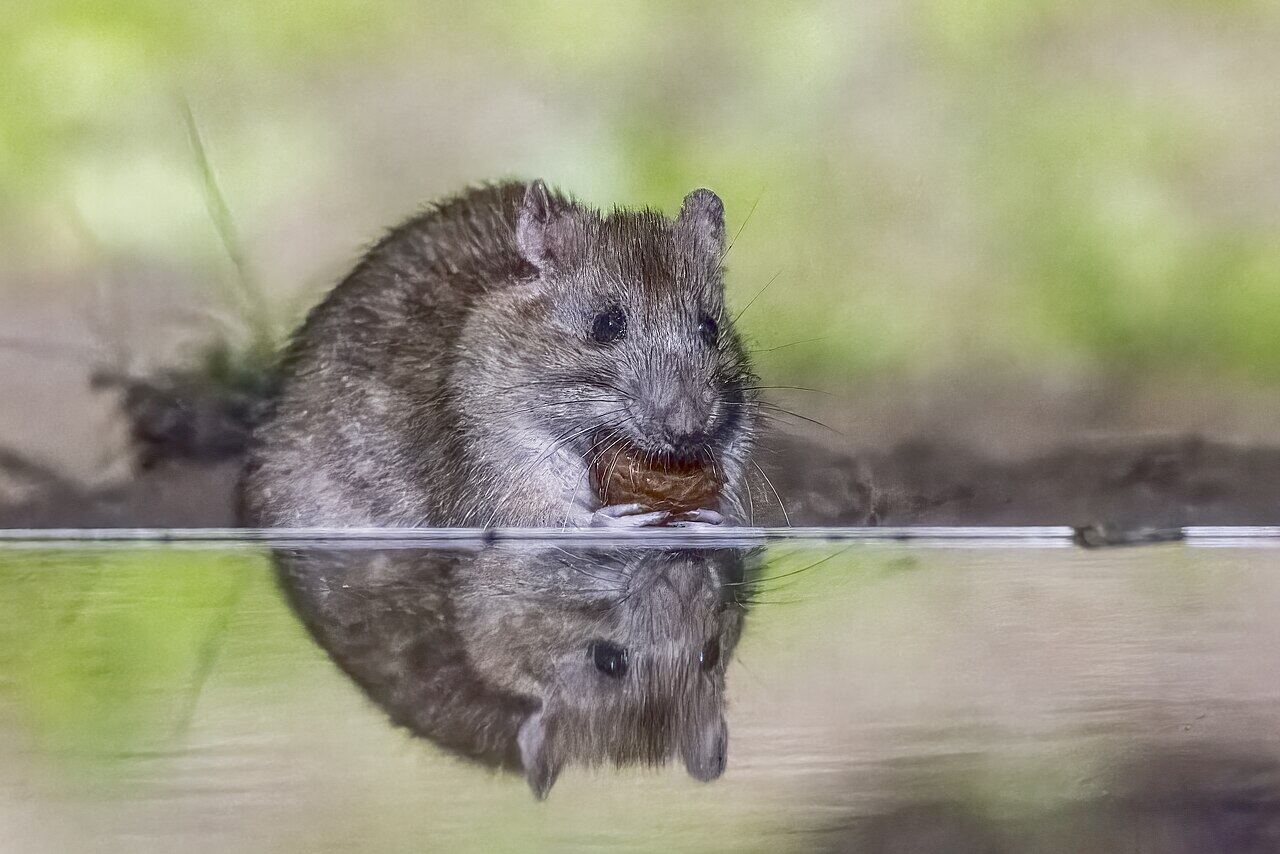
To get rid of rats in Baltimore, cut their food first, then treat the burrows outside, trap the rats inside and seal the cellar and rear wall. Request a free Rat Rubout inspection through 311 for burrows in your yard or alley. Use snap traps along the walls indoors, prebaited for a few days. Seal gaps with metal, mortar or hardware cloth. Doing only one of those usually fails.
Step 1: confirm it is rats
Baltimore's rats are Norway rats. Look for droppings about 3/4 inch long, burrows about 2 to 3 inches across with fresh dirt in the yard or along the fence, dark rub marks along walls and gnawed can lids. If the droppings are rice-grain size and turn up in drawers, it is mice instead. See Norway rats vs house mice.
Step 2: cut the food
This step costs nothing and makes every other step work. The Hopkins research on Baltimore rats found that blocks refill to the level their food and shelter can support.
- Keep every can lidded. City code requires tight-fitting covers kept closed.
- Do not set out bags. DPW says rats chew through them.
- Set cans out no earlier than 6 p.m. the night before pickup and bring them back by 6 a.m. the next day.
- Bring pet food in at night and pick up pet waste daily.
- Stop feeding birds until the rats are gone, or clean up spilled seed every evening.
- Use a closed compost bin with a solid or wire bottom, and keep meat and oily food out.
Talk to neighbors. One open can on a shared alley feeds rats for the whole block.
Step 3: request Rat Rubout
Call 311 or file online to request DPW's Rat Rubout program. A worker inspects for active burrows and, if one is present, places poison deep inside it and marks it with a yellow flag. You need to sign a right of entry form so the worker can go into your yard. It lasts 120 days.
Rat Rubout treats burrows outside. It does not treat inside your house or seal anything. Our 311 guide covers the details.
Step 4: trap inside
Indoor rats are best handled with traps. Use large snap traps made for rats, not mouse traps. Nebraska extension notes that rats are wary of new objects and may wait up to two weeks before going near traps, and suggests prebaiting with untreated bait for several days. Place traps along walls, with the trigger end perpendicular to the rat's path, near rub marks and entry points.
Good baits include peanut butter, a bit of bacon or whatever the rats have been eating. Check traps every day. Wear gloves to remove catches, double-bag them and put them in a lidded can. Keep traps inside covered boxes where kids or pets can reach. See best rat and mouse traps.
Avoid store-bought poison indoors. Rats that eat it often die in walls, and EPA rules limit consumer products to bait stations with blocks or paste for a reason.
Step 5: seal the house
Rats keep coming as long as there is a way in. Most rowhouse entries are low: pipe and gas line gaps in the cellar walls, the front wall under the stoop, cracked mortar, old coal chutes, floor drains and the joint under the rear addition.
Nebraska extension recommends sealing utility openings tightly with metal or concrete. Hardware cloth, sheet metal and mortar hold up against gnawing. Foam and caulk alone do not. Read rodent-proofing a Baltimore rowhouse.
If rats are coming up from a floor drain or the cellar floor, a plumber can camera the sewer lateral for breaks.
Step 6: deal with the burrows you can reach
If Rat Rubout does not get to your yard, or burrows keep reopening, a private provider can treat them. Under EPA rules, outdoor loose bait is only allowed at least six inches down active burrows. Once burrows stay closed, collapse and fill them, adding gravel or buried hardware cloth where they keep coming back. See rat burrow treatment.
When to call a professional
Call for help if you see rats inside living spaces, have more than a few burrows, cannot find the entry point, rent and need records, or have tried traps for a few weeks without results. A good provider inspects outside and in, traps, treats burrows and seals, and gives you a written plan and price first. Ask for the Maryland Department of Agriculture license number. See rat control and the cost guide.