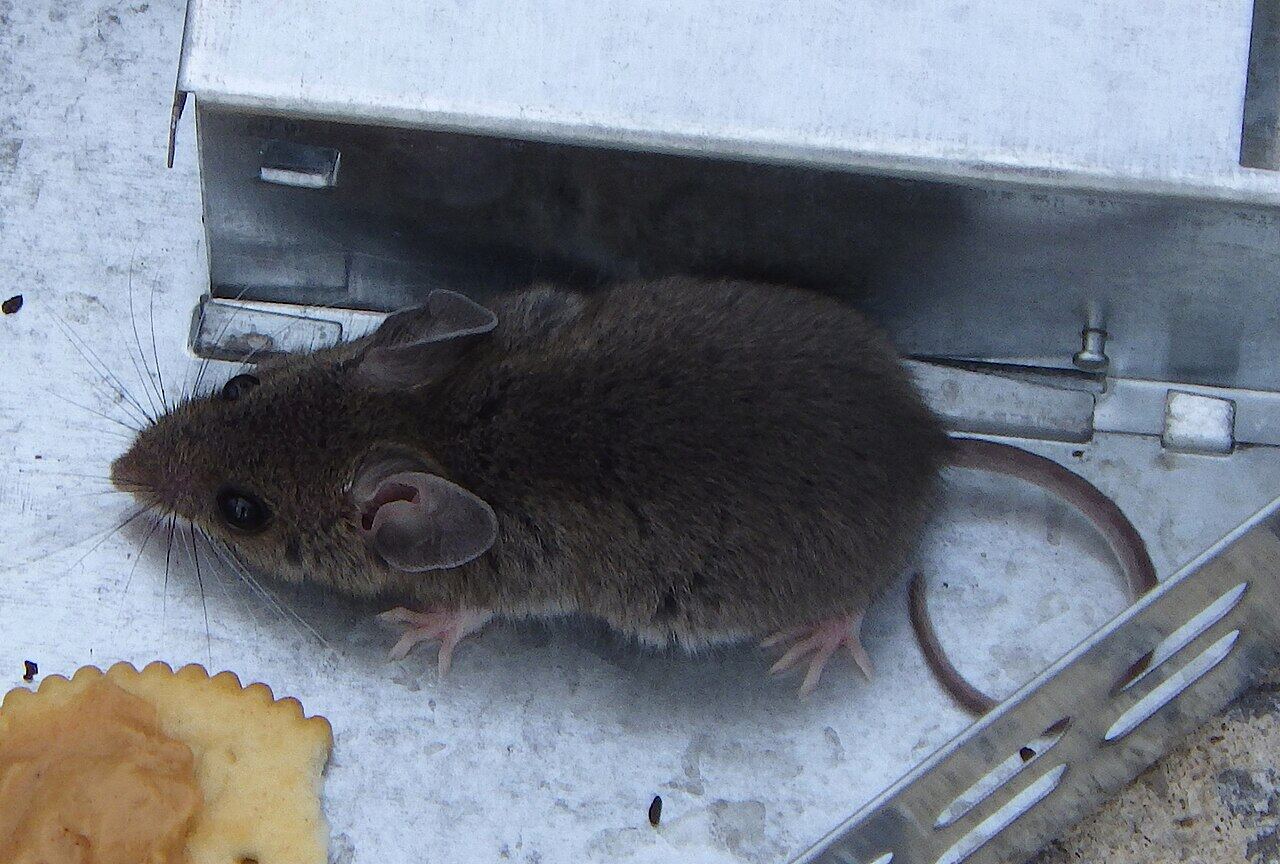
A house mouse can fit through a hole about a quarter inch across, roughly the width of a pencil, according to the CDC. University of California IPM adds that mice can squeeze under gaps a quarter inch tall and through openings 3/8 inch wide. Norway rats need a little more: University of Nebraska extension says rats can enter through any opening larger than half an inch, and they gnaw and dig to widen gaps.
Why such small gaps work
A mouse's skull is the widest hard part of its body, and if the head fits, the rest follows. A rat works the same way at a larger size. Both also gnaw. A gap that is a little too small in soft mortar, wood or plastic can become big enough in a night or two.
That is why sealing has to be thorough. A gap the size of your thumb under a sink or around a gas line is wide open to a mouse. UC IPM recommends sealing openings larger than a quarter inch.
Where quarter-inch gaps hide in Baltimore homes
In older rowhouses:
- Around gas lines, water pipes and cable lines through cellar walls
- Under worn exterior and cellar door thresholds
- Around radiator pipes where they go through floors
- Behind stoves, dishwashers and refrigerators where lines enter the wall
- At the joint where a rear kitchen addition meets the original wall
- In cracked or missing mortar at the base of brick walls
- Behind formstone where it meets the sidewalk
In county homes with garages and crawl spaces:
- Under the garage door, where the seal is worn or the slab is uneven
- Around crawl space vents with broken screens
- Where siding meets the foundation
- Around dryer vents and outdoor faucets
Half-inch gaps and rats
Rats need a little more room but are stronger and more persistent. In Baltimore, rats most often get in through:
- Pipe and sewer line entries in the cellar
- Cracked foundations and washed-out mortar
- Floor drains without secure covers and uncapped cleanouts
- Old coal chutes and cellar windows
- Gaps under rear additions and porches
Rats dig too. A gap at the base of a wall can turn into a tunnel under the foundation. If you find a burrow right against your house, there may be an opening below grade.
How to find gaps
Use a flashlight at night. Shine it along the base of walls, around pipes and at door bottoms from inside. Light coming through from outside means a gap. In the cellar, look for droppings, greasy rub marks and gnawing near openings. Those tell you which gaps rodents are using.
A simple test for a suspected gap: dust a little flour or talc in front of it and check for tracks the next morning.
How to seal them
The CDC recommends steel wool for small holes, held in place with caulk or spray foam, and lath screen, metal, cement, hardware cloth or metal sheeting for larger holes. UC IPM warns that plastic, rubber, vinyl and expanding foam on their own do not stop mice, and that steel wool can rust over time. Nebraska extension recommends sealing utility openings tightly with metal or concrete.
- Small gaps under half an inch: copper mesh or steel wool packed tight, capped with sealant
- Larger gaps: hardware cloth or sheet metal, fastened, then sealed at the edges
- Cracked mortar: mortar patch
- Door bottoms: metal-backed sweeps or new thresholds
See steel wool vs copper mesh and rodent-proofing a Baltimore rowhouse.
Why the pencil test helps
A simple way to check a gap is the pencil test. If an ordinary pencil fits into a gap, a mouse can likely get through it. If a gap is wider than your thumb, a rat may be able to use it, especially if the edges are soft mortar or wood it can gnaw.
Use that test as you walk the cellar, the rear of the house and the kitchen. Look closely at spots where rodents have left signs: droppings, grease marks or gnawing near a gap tell you it is in use. In older rowhouses, expect to find dozens of gaps the first time you look. Start with the ones near droppings and work outward. Write them down so you can check them again in a few weeks.
Seal after the rodents are out
If mice or rats are already inside, trap first or at the same time. Sealing them in means they die in the walls. Seal the last openings once traps stop catching. See rodent exclusion if you want a technician to do it.