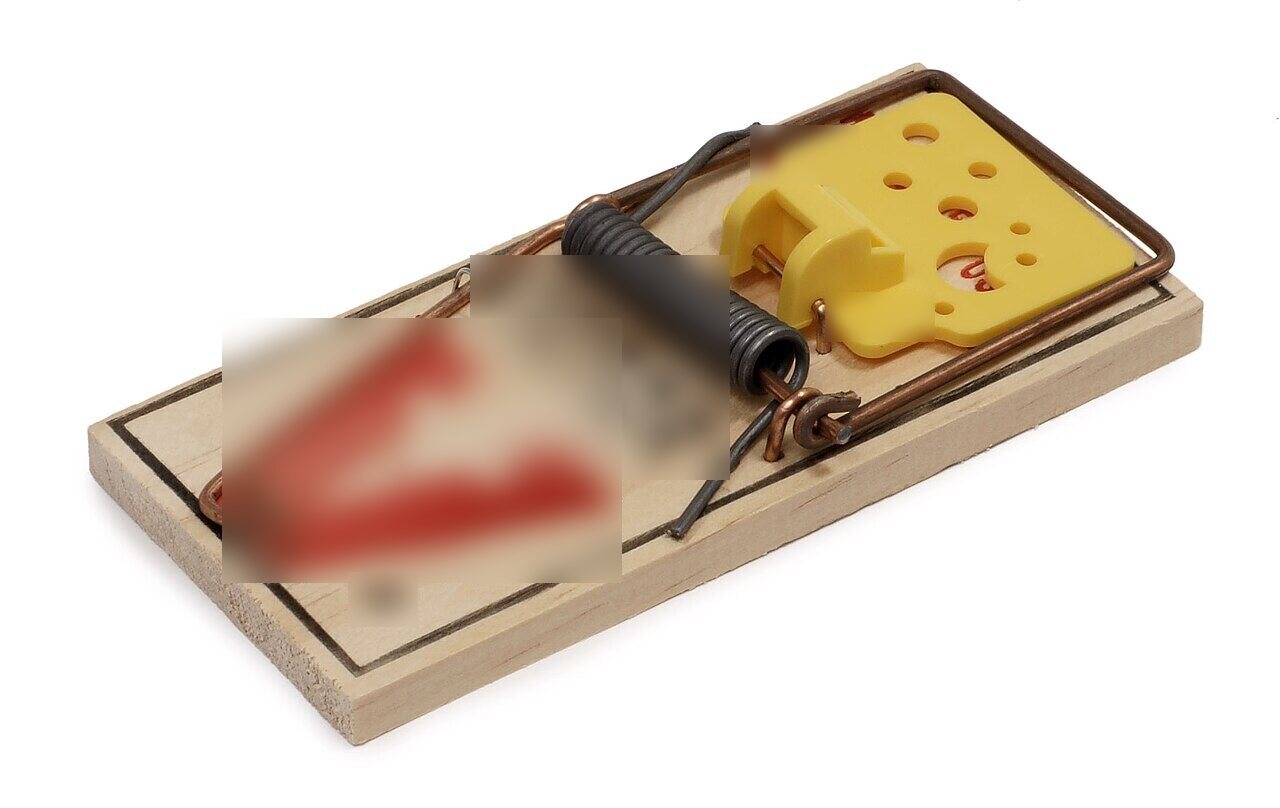
For most homes, snap traps work best for both rats and mice. University of California IPM says snap traps work well in most situations for mice, and University of Nebraska extension recommends them for rats, set with the trigger end perpendicular to the rat's path. Use rat-size traps for rats. Bait with what the rodents are already eating, set many traps along walls and give rats a few days of prebaiting before setting the traps.
Snap traps
The classic wooden or plastic snap trap is cheap, quick and easy to check. Plastic models with a large trigger plate are easier to set and to clean.
- For mice, use mouse-size traps, placed a few feet apart or closer along walls.
- For Norway rats, use rat-size traps. A mouse trap will not hold a rat.
- Set traps along walls, where rodents travel, with the trigger toward the wall or perpendicular to the path.
- Use more traps than you think you need. A dozen for a mouse problem in a kitchen is normal.
Check traps every day, wear gloves to remove catches, and double-bag them for a covered trash can.
Electronic and multi-catch traps
Electronic traps kill with a shock inside an enclosed box. They are clean and quick to empty, and kids and pets cannot easily touch the inside. They cost more and need batteries.
Multi-catch live traps for mice catch several at once. UC IPM notes that live traps need frequent checking and that relocating mice does not work. Released mice find their way back or into another house. Plan to euthanize humanely or use a different trap.
Multi-kill devices using compressed air are another option in some settings.
Why glue boards fall short
UC IPM says adult rodents can often detect and avoid glue, so glue boards mostly catch young ones. Trapped animals suffer and have to be killed, which many people find hard to do. Glue boards also catch pets, birds and other animals by accident. Snap and electronic traps are better choices.
Bait that works
UC IPM says the best bait is often the food the mice are already eating. Peanut butter works for both rats and mice, though it can pose allergy risks in some households. For mice, a small tuft of cotton or dental floss on the trigger can work, since nesting females want it.
For rats, try peanut butter, a bit of bacon, dried fruit or whatever they have been raiding, like pet food or bird seed. Use a small amount pressed into the trigger, not a big glob the rat can lick off.
Rats need patience
Norway rats avoid new objects. Nebraska extension says it is common for rats to wait two weeks before interacting with traps and toxicants, and recommends prebaiting with untreated bait for several days.
- Place unset traps with bait along the rat runs.
- Let the rats take the bait for a few days.
- Then set the traps, keeping the same bait and placement.
- Do not move traps around once rats start using them.
Wear gloves when handling traps so they do not carry your scent as strongly.
Where to set traps in a Baltimore home
For rats in a rowhouse:
- Along cellar walls, especially near pipe entries, floor drains and the front wall under the stoop
- At the base of the cellar stairs
- Behind the stove or refrigerator on the first floor if you have seen droppings there
For mice:
- Under the kitchen sink and inside base cabinets
- Behind and beside the stove, refrigerator and dishwasher
- Along baseboards where you see droppings
- In closets where plumbing rises
Keep traps inside covered boxes or stations wherever kids or pets can reach.
Keeping traps safe around kids and pets
Snap traps can hurt fingers and paws. Where kids or pets can reach, put traps inside covered trap boxes or stations, or behind appliances and inside cabinets where pets cannot get to them. Electronic traps with enclosed chambers are another option.
Never use loose poison indoors as a substitute. EPA rules require consumer rodenticides to come in bait stations with block or paste bait for this reason. If you have pets, tell any technician who comes out so trap and station placement accounts for them.
Traps work best with sealing
Traps remove the rodents that are inside now. If the gaps stay open, more come in. Once catches slow, seal the entry points. See how small a hole a mouse can fit through and rodent exclusion. If a few weeks of trapping has not solved it, a technician can find the entry and set up a better trap plan. See trapping and removal.