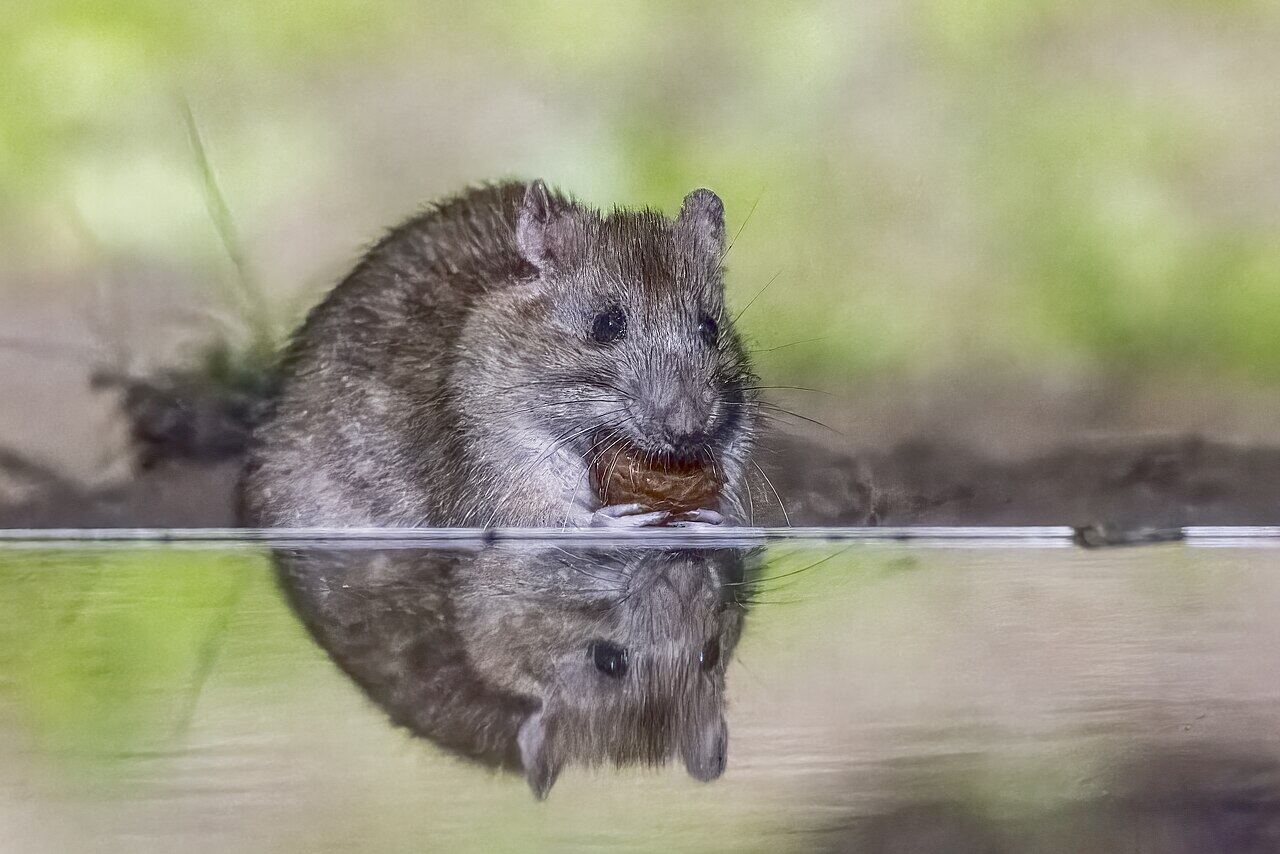
Rats and mice go into garages for food, shelter and warmth. Bird seed, grass seed, pet food, recycling and cardboard draw them in, and a car engine that was just running is a warm place to nest. In Baltimore County homes, mice usually get in under a worn garage door seal. In the city, cars parked on rear pads by the alley sit right next to the rats' feeding strip. Store food in metal bins, fix the door seal and set traps along the walls.
Signs in the garage
- Droppings along walls, on shelves and near stored food
- Chewed bags of seed or pet food
- Shredded paper, insulation or fabric in a corner or inside a box
- Gnawed edges on the door bottom or wood trim
- A musky smell when you open the door
Large droppings and gnawed wood at the door point to rats. Rice-size droppings and shredded nests point to mice. See rat droppings vs mouse droppings.
Signs in the car
Rodents nest under the hood, in the air filter box, in the cabin air intake and behind the dashboard. Look for:
- Nest material, leaves, acorns or seeds under the hood
- Droppings on the engine or battery
- Chewed wires, hoses or insulation
- A musty smell through the vents when you turn on the fan
- Warning lights or electrical problems that appear suddenly
If you find chewed wiring, have a mechanic check it before you use the car. Damaged wires can cause electrical problems. Check whether your insurance covers rodent damage.
How rodents get into a garage
- Under the overhead door, where the rubber seal is worn or the slab has settled
- Gaps at the sides and top of the door
- Holes around pipes, electrical lines and dryer vents in the garage walls
- Gaps where the wall meets the slab
- An open side door or broken window
The CDC says mice can fit through a hole the width of a pencil. Nebraska extension says rats can enter through openings larger than half an inch. A garage door seal that does not touch the floor everywhere is usually enough.
How to seal a garage
- Replace the bottom seal on the overhead door. If the slab is uneven, use a thicker seal or a threshold seal on the floor.
- Add or replace side and top weather stripping.
- Seal gaps around pipes and lines with copper mesh or steel wool plus sealant, and larger gaps with hardware cloth or sheet metal.
- Patch gaps where the wall meets the slab with mortar or concrete.
- Put a sweep on any side door.
- Seal the door between the garage and the house, since that is how mice reach the living space.
See cellar and garage rodent control.
Protect the car
- Do not keep pet food, seed or trash in the car or garage in open containers. Use metal or heavy plastic bins with lids.
- Use the car regularly. Cars that sit for weeks get nests.
- Pop the hood and check the engine bay every week or two if you have had activity.
- Set traps around the car on the garage floor, inside covered boxes.
- For a car parked on an alley pad, keep the area around it clear of trash and debris.
Repellent sprays and plug-in devices are sold for engines. Nebraska extension says no repellents are known to be effective on rats, and UC IPM says ultrasonic devices have very limited use. Do not count on them. See do rodent repellents work.
Cleaning a garage after rodents
Once the activity stops, clean up droppings and nests the CDC way: ventilate for 30 minutes, wear gloves, spray with disinfectant or a fresh one-to-nine bleach mix, wait five minutes and wipe up with paper towels. Do not sweep or blow out droppings with a leaf blower or compressed air. For nests in a car, a mechanic can remove the air filter and clean the box, and replace a cabin filter that has been fouled.
Baltimore rear parking pads
Many city rowhouses have a concrete pad or a small garage off the alley. Rats from the alley burrow under the edges of settled pads and nest in clutter around them. A car parked there overnight is next to their feeding area. Keep cans lidded and away from the car, clear clutter, check pad edges for burrows and request Rat Rubout through 311 if you see burrows. See rat burrow treatment.